
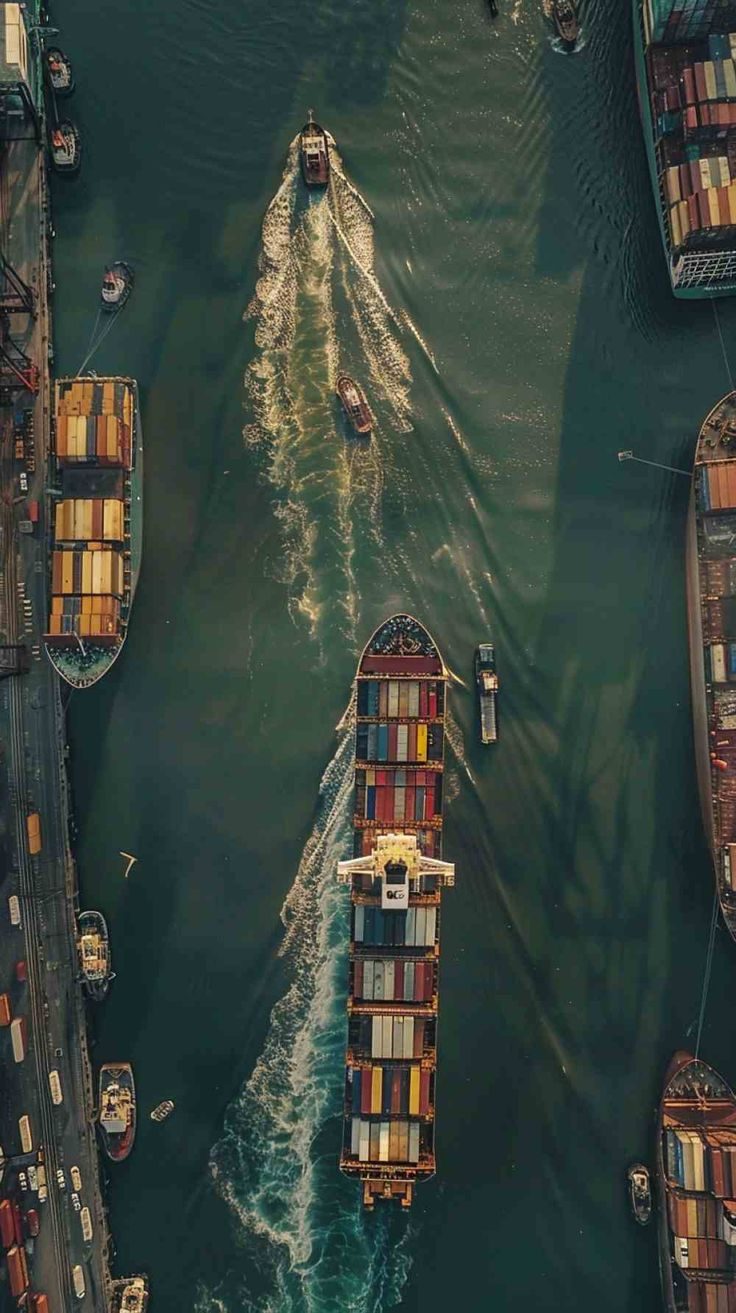
The degrees of autonomy
Autonomous shipping generates more coverage than deployment. That is not a criticism — the technology is developing genuinely — but anyone planning a fleet or a career needs a realistic view of the timeline rather than the press releases.
The IMO's work on Maritime Autonomous Surface Ships (MASS) uses a widely referenced set of degrees:
| Degree | Description | Crew |
|---|---|---|
| One | Automated processes and decision support; seafarers on board to operate and control | On board |
| Two | Remotely controlled with seafarers on board | On board |
| Three | Remotely controlled without seafarers on board | Ashore only |
| Four | Fully autonomous; the system determines and takes action | None |
Degree one is already normal. Track control, integrated bridge systems, engine automation and decision support are standard on modern tonnage. Most of what is marketed as "autonomy" today sits here.
Degrees three and four exist in trials, short-sea demonstrations, ferries in confined waters and specialised uncrewed vessels — not in deep-sea commercial trade.
The regulatory position
The IMO has been developing a framework for MASS, working through how existing conventions — SOLAS, COLREG, STCW, MLC, and the liability regimes — apply to vessels with reduced or no crew. The unresolved questions are substantial:
| Question | Why it is hard |
|---|---|
| Who is the "master"? | Conventions assume a person on board with authority |
| How is a proper lookout maintained? | COLREG Rule 5 requires sight, hearing and all available means |
| Who renders assistance at sea? | SOLAS obligations to assist persons in distress |
| Who performs firefighting and damage control? | No crew, no intervention |
| How does STCW apply to remote operators? | Certification framework built for seagoing service |
| How does MLC apply? | It is a seafarers' convention |
| Where does liability sit after a casualty? | Operator, manufacturer, software provider |
| What is the cyber exposure? | A remotely controlled ship is a control-system target |
None of these are unsolvable. All of them take time, and international rulemaking moves at the pace consensus allows — as the adjournment of the IMO Net-Zero Framework adoption in October 2025 demonstrated.
Where uncrewed operation works today
- Short-sea and inland, on fixed routes in well-charted, well-monitored waters
- Ferries on short crossings with shore supervision
- Survey and research vessels, small uncrewed platforms doing hydrographic and environmental work
- Offshore support tasks, inspection and monitoring
- Defence and security applications
The common factors: short duration, predictable environment, no cargo care obligation, and no need for anyone to fix anything mid-voyage.
Why deep-sea is different
A cargo ship on a 40-day voyage is a self-maintaining industrial plant. Pumps fail, filters clog, alarms need investigation, and someone has to physically fix things. Crew are not only navigators; they are the maintenance capability that keeps the ship running between ports.
Removing them requires either dramatically higher machinery reliability, or acceptance that a fault means a stopped ship until someone reaches it. That economic calculation, more than the navigation problem, is what governs the timeline.
What it means for seafarer demand
Not much, this decade. The BIMCO/ICS Seafarer Workforce Report 2026 records a shortfall of 39,100 certificated officers and a need for 113,735 additional officers by 2030. Meanwhile more than 90% of the active fleet by tonnage still operates conventionally.
What autonomy does change is the shape of maritime work over the longer term: more shore-based control-room roles, more remote support and diagnostics, higher demand for electrical, automation and data competency, and a smaller number of highly skilled people managing more assets.
For anyone entering the industry now, the practical implication is not "don't go to sea". It is "build the automation, electrical and data competencies alongside the traditional ones", because those are the skills that transfer as the shape changes.
MASS degrees per IMO terminology; workforce data from BIMCO/ICS 2026; fleet fuel data from UNCTAD RMT 2025. Maturity chart is conceptual. Reviewed by the Zeaclub Editorial Team, 24 August 2026.
Frequently asked questions
Are autonomous ships in commercial service?
Uncrewed and remotely supervised vessels operate in short-sea, ferry, survey and offshore applications. Deep-sea commercial trade remains crewed.
What is MASS?
Maritime Autonomous Surface Ships — the IMO's term, with four degrees ranging from automated decision support with crew on board to full autonomy.
Will autonomy solve the officer shortage?
Not within the current decade. The shortfall is 39,100 officers today with 113,735 more needed by 2030, and the fleet remains overwhelmingly conventionally operated.
What is the biggest obstacle?
Not navigation. It is maintenance — a deep-sea voyage requires people who can physically fix things — together with an international regulatory framework that assumes a master and crew on board.