
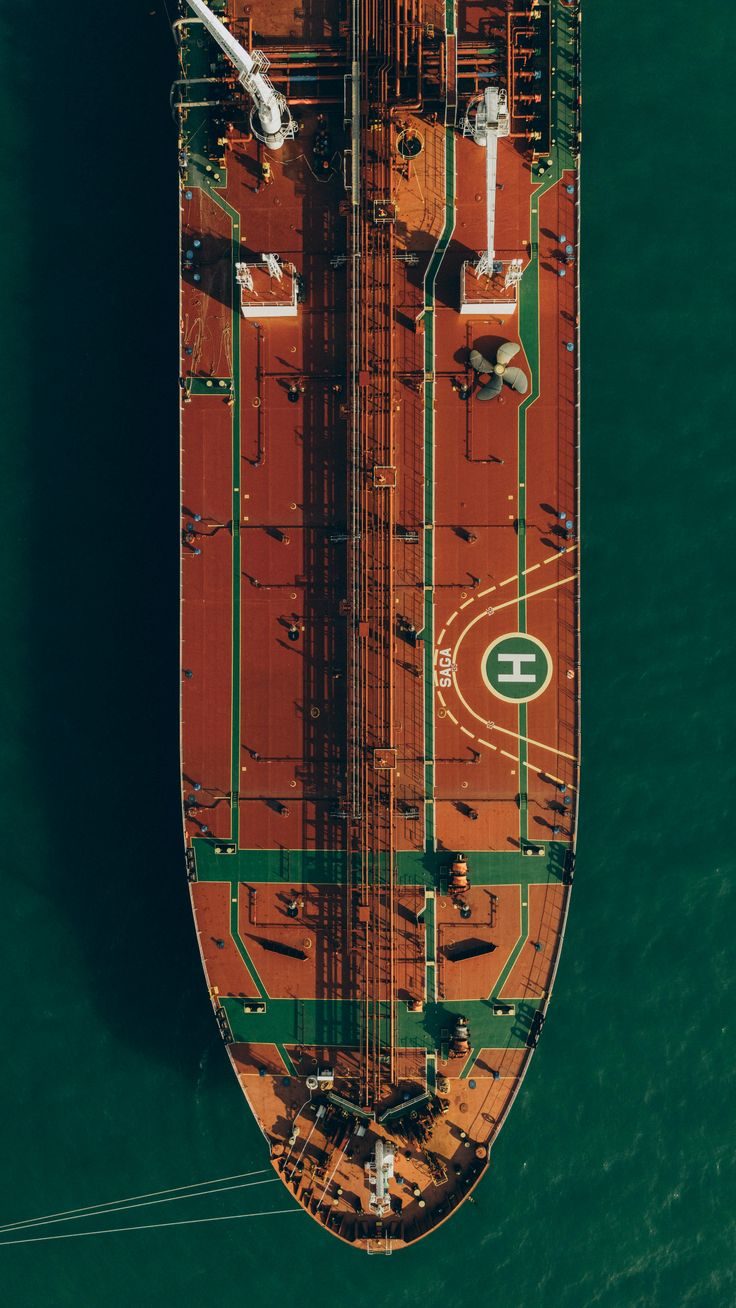
The comparison
Interest in "fleet ship management" rose 30% month on month to August 2026, and the third-party management category has been growing steadily against a global fleet of 85,148 merchant vessels. Analysts sizing the ship management services market put it in the region of USD 3.7 billion in 2026 with a high single-digit compound growth rate to the mid-2030s — and note that a handful of large groups take the majority of third-party revenue. `[VERIFY]` Market-sizing figures vary widely by methodology; attribute clearly or omit.
The strategic question for an owner is not which model is better. It is which model is better at your fleet size, in your segment, with your compliance exposure.
| Dimension | In-house management | Third-party management |
|---|---|---|
| Fee | No external fee; full overhead cost | 2–4% of OPEX |
| Fixed overhead | Shore staff, offices, systems, licences | Absorbed by manager |
| Scale in purchasing | Limited below ~15 vessels | Significant; fleet-wide contracts |
| Crew pool access | Must be built | Immediate, established |
| Compliance capacity | Must be hired for each new regime | Amortised across managed fleet |
| Control and speed | Direct; decisions in hours | Contractual; decisions in days |
| Cultural alignment | Total | Negotiated |
| Data ownership | Complete | Contract-dependent |
| Flexibility on fleet size | Poor — staff are fixed | Good — scale up or down |
| Confidentiality | Absolute | Manager sees peer data |
The breakeven question
The honest answer is that in-house overhead is close to fixed while third-party fees are close to linear. Somewhere between those two lines is a crossover.
The declining line is in-house shore cost per vessel; the flat bar is a third-party fee. In this indicative model the crossover sits between 12 and 18 vessels — which matches what most owners find in practice. Below roughly a dozen ships, an in-house department cannot carry a technical superintendent, a crewing manager, a QHSE manager, a purchasing function, an emissions specialist and a cyber capability without those people being spread impossibly thin.
Two caveats matter more than the curve:
Compliance is not linear. Building EU ETS and FuelEU Maritime capability costs roughly the same for four ships as for forty. So does IACS UR E26/E27 cyber compliance. Each new regime pushes the crossover point higher, favouring outsourcing for small fleets.
Crew access is not purchasable at small scale. With a 39,100-officer shortfall and 113,735 additional officers required by 2030, a three-ship owner starting a crewing department in 2026 is entering a seller's market with no track record. Managers with established cadet pipelines have a structural advantage a new entrant cannot buy quickly.
What in-house buys you
Speed. A decision that takes three emails and a contractual notice with a manager takes one phone call in-house.
Alignment. The manager's incentive is fee retention and portfolio stability. The owner's incentive is asset value and earnings. These usually coincide and occasionally do not — most visibly around dry-dock scope, where deferral flatters this year's OPEX and costs next year's steel.
Data. The owner's own PMS, own crew records, own performance history, own everything — with no export negotiation on termination.
Confidentiality. A manager running your ships also runs your competitors'. That is normally fine; occasionally it is not.
What third-party buys you
Purchasing power. Fleet-wide lubricant, paint, spares and insurance contracts negotiated across hundreds of vessels.
Regulatory absorption. New regime, no new hire on your payroll.
Crew supply at scale, including the manning agency network and the cadet berths.
Optionality. Sell three ships and the fee stops. Make three shore staff redundant and it does not stop that quickly.
Benchmarking. A good manager knows what a fair main engine overhaul costs because they bought forty last year.
The hybrid that most owners actually run
In practice the market has converged on a middle path:
- Technical management outsourced to a specialist
- Crew management outsourced, sometimes to a different specialist
- Commercial management retained in-house
- A small owner's team — one or two people — holding the manager to account with independent data
That last line is the one owners underinvest in. Outsourcing management does not outsource accountability. An owner with no shore-side capability at all cannot tell a good monthly report from a plausible one, and a manager who is never challenged will drift toward whatever is easiest to administer.
A decision framework
Score each factor 1–5 for your situation. High totals favour third-party.
| Factor | Favours third-party if… |
|---|---|
| Fleet size | Under 12 vessels |
| Fleet growth plan | Volatile or opportunistic |
| Segment complexity | Gas, chemical, offshore, cruise |
| Trading area | EU/EEA exposure (ETS, FuelEU) |
| Existing shore capability | None or thin |
| Crew nationality strategy | No established pool |
| Time horizon on assets | Short — asset play, not operator |
| Financing covenants | Lenders requiring recognised manager |
That final row is often decisive and rarely discussed. Ship finance documents frequently require a manager acceptable to the lender, which quietly removes the choice for leveraged owners.
fleet count from the BIMCO/ICS Seafarer Workforce Report 2026; market sizing from third-party analyst reports and should be attributed at publication. Cost curves are illustrative models, not benchmarks. Reviewed by the Zeaclub Editorial Team, 24 August 2026.
Frequently asked questions
At what fleet size does in-house management make sense?
Most owners find the crossover between 12 and 18 vessels, earlier in a single segment and single trading area, later where compliance exposure is high.
Can you outsource technical but keep crewing in-house?
Yes, and some owners do it precisely because crew culture is where they differentiate. Just define the rest-hours and workload interface carefully.
Do lenders care who manages the ship?
Frequently, yes. Loan agreements often name acceptable managers or require lender consent to a change.
Is third-party management cheaper?
On fee alone, no. On total shore-side cost per vessel below roughly a dozen ships, usually yes — and increasingly so as each new compliance regime arrives.